

News
New Balance 1080 vs 860: Do You Need Neutral or Support?
We're still asking ourselves the same question - neutral or stability shoe?
Both types have come a long way and are changing within their traditional categories, with neutral shoes getting more stable and stability shoes getting bouncier. The New Balance 1080 (neutral) and 860 (stability) are two best examples to explain these differences, and help chose the most suitable option to wear for running.
The Verdict:
The New Balance 1080 and 860 are both daily trainers designed for easy and long running. They both have the same 6mm drop and 40mm stack height in the heel. If you have a neutral gait and enjoy a cloud-like underfoot feel, the 1080 would be most appropriate for you. If your feet roll inwards and you need that extra bit of support, the 860 would be your best option. Let's take a deep dive into the technology behind both shoes to further explain their differences.
How do the 1080 and 860 differ?
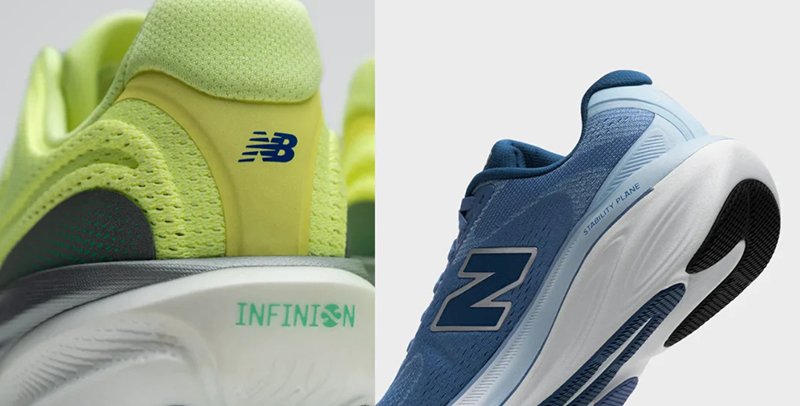
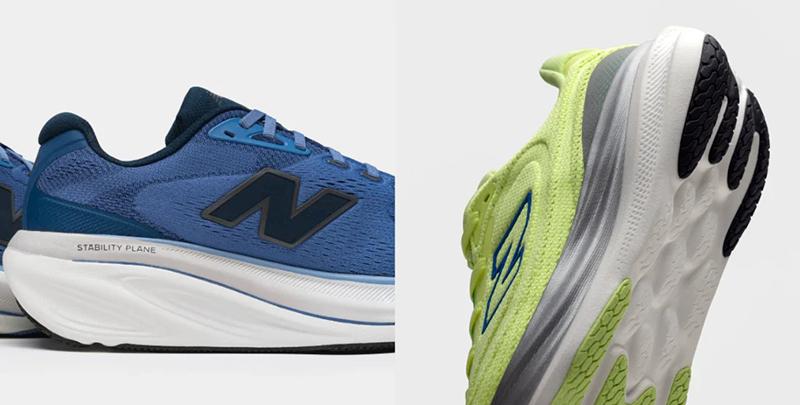
The 1080 is a neutral daily running trainer with a single layer of New Balance's new foam called Infinion, a nitrogen-infused supercritical TPEE-EVA foam that makes up the midsole. The supercritical process used to make this foam involves infuses nitrogen into the midsole to create a lighter and bouncier ride. With that being said, this foam has a softer and energetic under-foot feel to it. The softness feels great when running however, softer foams aren't known for being as laterally stable. To combat this, New Balance have made the base wider as well as adding some additional foam under the arch, which has helped make version 15 of this shoe relatively stable for a neutral trainer.
The 860 is a supportive, stability daily running trainer which has the same wider base as the 1080. The midsole is made up of a dual-density foam which means there are two layers of different foam cushioning. The top layer is Fresh Foam X which helps provide the soft and cushioned under-foot feel. The firmer bottom layer of foam helps to reduce your foot from excessively rolling inward. An asymmetrical plate in the midsole, known as the Stability Plane, sits between the two layers of foam and acts as a resistance for twisting motions to help stabilise your foot better.
Final Verdict - which shoe should you choose?
They're both cushioned and offer a level of stability. However, the 1080 is bouncier and softer underfoot, while the 860 gives you targeted support where it's needed. Claiming that a shoe is neutral or supportive doesn't always give all the information needed and often pushes people to categorise them. A better way to think about it is to treat each shoe and each runner as an individual. Just because you've needed or wanted stability from your running shoes in the past doesn't mean you should disregard all the neutral options in the market. On the flip side, just because you've always run in a neutral shoe doesn't mean you wouldn't benefit from trying one marketed for stability.
In summary, the 1080 is perfect for that runner who wants something with a little extra bounce in it, as well as the lightweight, flexible feeling that the shoe offers. It would also be suitable for someone looking for very mild lateral stability. The 860 is the go to choice for someone looking to feel more protected on their runs, that will gently guide their gait into a more stable positioning, and also be a fun shoe to run in.
Although the support levels of these two shoes are at opposite ends of the spectrum, there are more crossovers than you'd initially think, and ultimately the decision on which is best comes down to an individual's gait, preferences, training history and any injuries. If you're still unsure then get yourself down to one of our Up and Running stores, speak with our staff and try them both out to see which one you prefer.
Up & Running
6, The Exchange
Nottingham
NG1 2DD
T: 0115 924 2242
www.upandrunning.co.uk